
Blade fuse color chart and how to test a blown fuse
1. Identify the fuse size first
Blade fuses come in several body sizes that do not fit each other's sockets. Check the size before the color, because the same color can mean different ratings in different sizes.
| Type | Body size (W × T × H, mm) | Typical ratings |
|---|---|---|
| Micro2 | 9.1 × 3.8 × 15.3 | 5–30 A |
| Micro3 (three legs) | 14.4 × 4.2 × 18.1 | 5–15 A |
| Low-profile Mini | 10.9 × 3.81 × 8.73 | 2–30 A |
| Mini (ATM) | 10.9 × 3.6 × 16.3 | 2–30 A |
| Standard (ATO / ATC) | 19.1 × 5.1 × 18.5 | 0.5–40 A |
| Maxi | 29.2 × 8.5 × 34.3 | 20–120 A |
Dimensions and ranges from the Wikipedia automotive fuse reference [1].
2. Blade fuse color chart (Mini and Standard)
On Mini and Standard blade fuses the body color follows a common code. The number printed on the fuse is what counts: colors repeat in Maxi fuses (for example, clear is 25 A in a Mini or Standard fuse but 80 A in a Maxi) [2].
| Rating | Color | Rating | Color |
|---|---|---|---|
| 1 A | Black | 10 A | Red |
| 2 A | Grey | 15 A | Blue |
| 3 A | Violet | 20 A | Yellow |
| 4 A | Pink | 25 A | Clear |
| 5 A | Tan | 30 A | Green |
| 7.5 A | Brown |
Sources: [1], [2]. Older vehicles and some motorcycles may use different fuse types, so read the rating on the fuse itself.
3. How to test a fuse with a test light (3 steps)
- Check the test light. Clip it to the battery negative and touch the probe to the battery positive. It should light. If not, the tool is the problem.
- Ground the clip and power the circuit. Clip to bare metal on the frame or to the battery negative. Turn the ignition or the switch for that circuit on, so the fuse is live.
- Touch both test points on top of the fuse. Most blade fuses have two small metal test points on the top, one for each leg.
| Result | What it means |
|---|---|
| Both sides light | Fuse is good. Power reaches the circuit; look further down the line. |
| Only one side lights | Fuse is blown. Replace it with the same size and rating. |
| Neither side lights | No power is reaching the fuse. Check that the circuit is switched on, then check the supply side. |
If the fuse is good, test at the bulb socket or the device plug. Power at the socket but no light means the bulb or device has failed. No power at the socket means a broken wire or a bad connection between the fuse and the device. The both-sides / one-side fuse check is based on [4]; the other steps are standard test-light practice.
4. Why fuses blow, and why a bigger fuse is a bad idea
A fuse protects the wire behind it. It is the weakest point on purpose, so it melts before the wire overheats. Common causes of a blown fuse include [5]:
- A short circuit, such as a wire rubbing through its insulation onto the frame
- Overload from added accessories (extra lights, USB chargers, horns)
- Battery connected the wrong way round
- Corroded or loose fuse holders and connectors
Honda's motorcycle owner's manual is direct about it: "Always replace a blown fuse with a spare fuse of the same rating", and "If a fuse fails repeatedly, you likely have an electrical problem" [3]. A higher-rated fuse lets the wire carry more current than it was designed for, so the wire heats up instead of the fuse blowing.
Safety. Do not probe airbag (SRS) wiring or engine computer (ECU) signal wires with a test light. A test light draws current and can damage electronics or trigger an airbag. Never replace a fuse with wire or foil. Turn the engine off before pulling fuses.
Where is the fuse box?
On cars, check the owner's manual for the fuse box positions. On motorcycles and scooters, fuses are often under the seat, behind a side cover, next to the battery or inside the fairing. Check your manual before removing panels.
Tool for this job
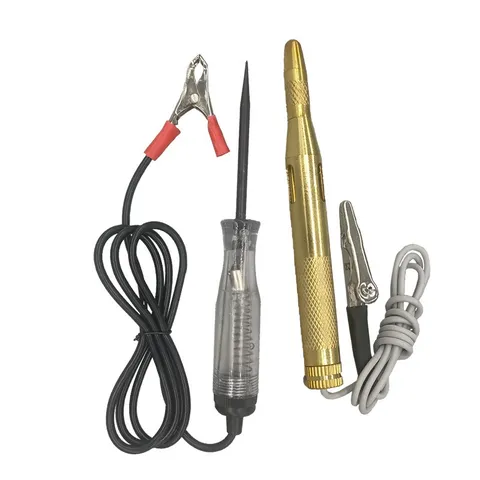
Ground clip and sharp probe for checking fuses, sockets and wires on 12V and 24V vehicles. Standard and digital display versions.
Buy on TikTok Shop- Wikipedia, Automotive fuse: en.wikipedia.org/wiki/Automotive_fuse
- Altronics, A guide to automotive blade fuses: altronics.com.au
- Honda motorcycle owner's manual, fuse replacement: webom.hondamotopub.com
- EngineerFix, How to tell if a blade fuse is blown: engineerfix.com
- Bikeman, causes of blown motorcycle fuses: bikeman.jp
General guidance only. Ratings and fuse locations vary by vehicle; follow your owner's or service manual.